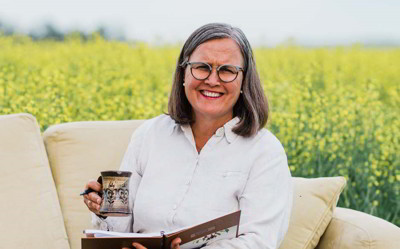
As is often the case, we are staying close to home this summer. We are fortunate to live in the parkland ecoregion of Manitoba. We have prairie, treed areas, and lake shores not too far from home. On our farm, we have bush quarters for walking or little campouts. The challenge, though, can often be getting away from home and business long enough to enjoy what is right around us.
While it is not easy to take a summer holiday away from a cattle farm, I have been figuring out ways to create family time and rest space really close to home, often right in my yard, somewhere in the bluff of trees between the house and the shop. I have been thinking more about this after being introduced to the book The Art of Rest: How to Find Respite in the Modern Age, a science‑based exploration into what truly helps us unwind, by Claudia Hammond. I first listened to Claudia on a podcast at a time when I was feeling pretty tired and a bit burnt out.
Fortunately, much of what she describes as restful, based on the research, are things I have access to on the farm. I do get enough sleep, so what I am working on is finding restful moments in my busy work day, where creating some space for rest can be a helpful way to strike some balance between productivity (otherwise known as working all of the time) and taking care of my well-being and the well-being of those around me, which I know will lead to better productivity and sustainability of the farm long-term and will keep me/us healthy and sane.
I will share Hammond’s list, and then some of the ways I am incorporating these into my daily routine, even when the day is full of chores and projects.
Here are the 10 most restful activities based on Hammond’s research. I will vouch for many of these, too, and write and reflect on several;
👉 Reading
👉 Spending time in nature
👉 Solitude (“I want to be alone”… yes, it is ok to want to be alone)
👉 Listening to music
👉 Doing nothing in particular (my favourite)
👉 A good walk
👉 A nice hot bath
👉 Daydreaming
👉 Watching TV
👉 Mindfulness/meditation
Reading: I like to read. I like to read in nature. I have a hammock strung up between two large poplars in a treed clearing in the yard (this is the spot between the house and the shop). The clearing is in a depression and is heavily treed, so from the hammock, you can no longer see any of the farm buildings, which is nice as it gives me the sense of “awayness.” This clearing also has a fire pit and a tire swing, and feels like camp. There are some dreams of a Ninja Slackline (checking the classifieds. We love the classifieds in Manitoba), and I am happy to create all the fun in the world in our little paradise. When it comes to reading, I am personally more of a non-fiction reader. I do like historical fiction, and remember binge reading Rohinton Mistry during one of the most relaxing summers of my life. According to Hammond, studies show that fiction is potentially more relaxing as it allows for the escapism that can help with relaxation, while non-fiction can move us to stay in our analytical brain. I still love non-fiction. (i.e, I find reading about relaxing relaxing.)
Solitude: I love people, and I love to be alone. I find the most restful times are often an evening walk alone out in the pastures. It combines spending time in nature with solitude and a bit of “do nothing in particular.”
Do nothing in particular: I love this, though at times I struggle with this one. It means there is no pressure to do anything. Doing nothing also means quieting your mind and not sitting and ruminating on what you must do, while you don’t do it. Sometimes when I am doing nothing in particular, I am still puttering about. I might bake some cookies, and then maybe I will go outside and water some flowers, bait a hook, or sort through some odds and ends for thrift store donations. I might flip through a magazine while I drink a coffee, or wander down to the shop to find that thing I thought I owned once. Regardless, there is no plan, and as far as I am concerned, I am not doing much, or worrying about what I am doing or not doing. I benefit from having family members who, while they were very good and dedicated at their jobs, provided an example of what life can be like when you allow time to “do nothing” or whitespace time. It can be helpful to reflect on family and cultural attitudes around rest, too. It can also be helpful to do this intentionally and communicate about it as a team, so you can be clear about when you are taking some rest time.
Daydreaming: Daydreaming is mind wandering; a spontaneous drift of thought. This one can be a bit tricky; mind wandering, if driven by negative thoughts and emotions, can slip us into worry or rumination. That can have a negative impact on rest and damage our mood. If daydreaming comes from positive emotions, curiosity, interest, excitement and hope, then it can boost creativity and problem-solving and offer a mental break from routine tasks and support us in future-planning (like farm transition planning).
The thing with rest is that we need it. It also needs to be intentional and scheduled. As I build more rest into my routine, I don’t feel compelled to get away, but I do start to get excited about reading in my hammock for an hour or planning the next hike. You heard it here first, folks, it is time to write “do nothing” on the calendar, at least for some portion of the day or week. My husband, and farming partner, likes to have this time between 6-7am. He is an early riser. In the spring-fall seasons, he goes out at around 5 am to check stock (and walks the pasture, which can also be restful) and then comes back for coffee, reading, etc. I am more of a night owl and love to watch Seinfeld reruns at 10 pm (watching TV is on the list!).
We do run a pretty busy operation. We also like our work, and do recognize that part of the reason we enjoy our farm is that we have been able to incorporate rest into our working day in a way that would not have been possible had we worked a 9-5. I can take a walk at 2 pm to check cows and incorporate many restful activities into that task. What is important is being conscious of taking in those restful moments, intentionally incorporating them, and also having a team that supports incorporating rest into our daily work. It is not “lazy” to “do nothing” and can create the space you need for creativity and joy.
Source & Resources:
Hammond, C. (2019). The Art of Rest: How to find respite in the modern age. Edinburgh, UK: Canongate.
10% Happier with Dan Harris podcast:
- Title: If You Want To Be More Productive, You Need More Rest. Here’s How To Get It.
- Guest: Claudia Hammond
- Air Date: June 11, 2025
- You can listen to it here (via iHeart)
Did you enjoy Rest on the Farm? You might want to check these articles out, too:
The Importance of Learning to Communicate on the Farm
The Importance of Connecting with Family & Friends
New Ideas on the Farm