What is farm family coaching?
Coaching is about discovery. Counselling is about recovery.
Farm family coaching is finding harmony through understanding.
It’s about avoiding the urge to “shelter in the tactics” of your advisors, rather it’s about taking the bull by the horns to figure out what you and the rest of the family need and want.
Coaching improves your family’s communication and conflict resolution skills so you can achieve a successful farm transition.
TLC model
The TLC model stands for farm Transition, Legacy Preservation and Conflict Resolution. Get individual coaching for your family to open up discussions about the topics that need attention – and less tension. After coaching over 1000 clients, this is Elaine’s tried and proven process that provides the following value:
Transition:
- Facilitate each family members’ needs and wants
- Outline a farm transition plan for the Management Circle and Ownership Circle
- Gain harmony through clear communication and understanding
- Develop a strong foundation to handle future bumps along the transition journey
Legacy Preservation:
- Increase profitability when running regular family business meetings
- Empower your family by creating rich conversations and relationships
- Set the next generation up for success
- Keep the farm and legacy intact
Conflict Resolution:
- Create a safe space to address and resolve conflict
- Feel heard and value every voice
- Create an accountability structure to execute the transition plan with timelines
- Clarify expectations and agreements of roles
- Gain greater ROE (Return On Energy) to run the family farm business better than ever before
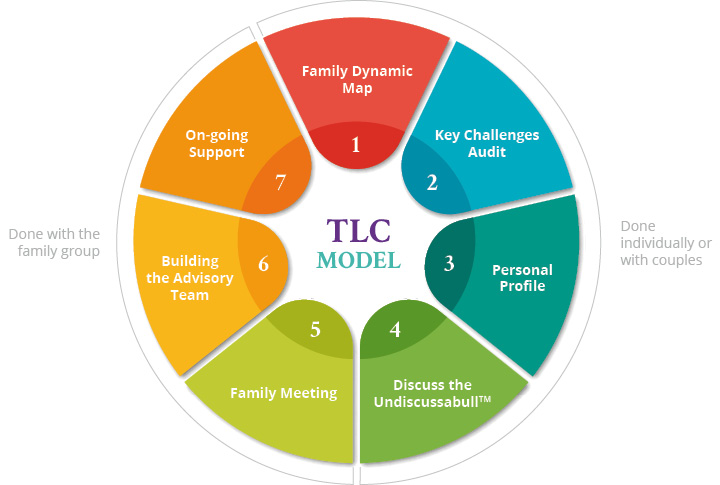
7-step process flow:
- Family Dynamic Map: During the discovery call, we will map out your family genogram in order to identify needs and age tasks, conflict points for farm and non-farm family members, list current advisors, and understand the urgency of coaching timelines.
- Key Challenges Audit: Identifying the areas that your business needs coaching attention (such as: fairness, residence needs, income stream, viability, dealing with difficult feedback, having better family meetings) and decreasing the anxiety of uncertainty for the future.
- Personal Profile: Providing contact information, identifying your current stage in farming career, outlining long and short term goals, clarifying expectations about your ideal inheritance, and the degree of risk and changes you’re willing to take.
- Discuss the UndiscussabullTM: Private personal or couple coaching calls in order to gain perspective on key issues to be discussed at the next family business meeting. Voicing the concerns you have not voiced before, stepping into having more courageous conversations, gaining new skills for better communication and conflict resolution, and accessing specific tools from the Coaching Team Toolbox for your unique situation.
- Family Meeting: Being clear about the goals and outcomes desired. Using proven facilitation methods to share expectations, timelines, expectations, and roles. In this family meeting, we share ideas, frustrations and concerns and identify the next action steps.
- Building the Advisory Team: Communicating with existing advisors (ie: accountants and lawyers) and referring to financial planners and other appropriate professionals (ie: physicians and counsellors). Start executing pieces of the plan where we have to seek more in-depth advice (ie: family income streams, real estate, division of property, etc).
- On-going Support: Regular check-ins with your coach and further facilitated meetings, as necessary. This is a crucial step in order to keep things moving in the right direction and not get sidelined or stuck by procrastination, lack of commitment to get things done, or going back to old habits. Talk does not cook rice. You’ve got this!
A Virginia Tech study showed that families that can communicate well regularly are 21% more profitable.
Coaching Testimonial

“I attended the meeting you spoke at in Stratford Ontario recently. We held an emergency family/farm meeting today because of issues that I had enough of. We used a ‘talking stick’ like you recommended and wrote a chart of rules. The rest of the family thought the idea that we needed a meeting was worth rolling their eyes over, until we got started. The younger ones were quick to clue in that they now have an opportunity to be bluntly honest. The older ones took a bit longer to believe they could truly say what they think. In the end, the meeting needed two sessions because there was so much to talk about… and so many things people didn’t realize were a big deal to the others. Your lessons and encouragement have given us the tools we need to get to a better place in our relationships and our business. Truly thankful.”
Kim Martin, Dairy Farmer, Ontario